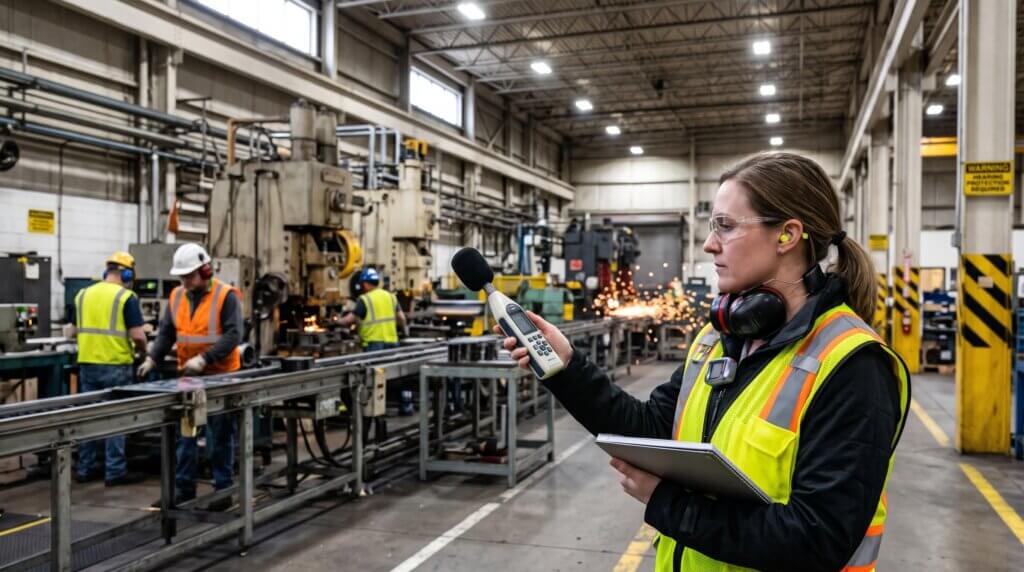
OSHA defines industrial hygiene as:
“The science and art devoted to the anticipation, recognition, evaluation, and control of those environmental factors or stresses arising in or from the workplace, which may cause sickness, impaired health and well-being, or significant discomfort among workers or among the citizens of the community.”
Whether your team is exposed to airborne particulates, noise, hazardous chemicals, biological agents, or ergonomic risk factors, an IH monitoring program shifts your organization from reactive crisis management to proactive quantitative prevention.
Key Reasons to Implement an Industrial Hygiene Program
1. Regulatory Compliance & Risk Mitigation
- Meet Stringent Standards: OSHA enforces statutory Permissible Exposure Limits (PELs), while organizations like American Conference of Industrial Hygienists (ACGIH) publish more modern health exposure benchmark limits called Threshold Limit Values (TLVs). Routine monitoring ensures your facility meets mandatory compliance thresholds and satisfies recognized industry standards of care or best practices.
- Avoid Substantial Penalties: Non-compliance can trigger steep OSHA citations—penalties that multiply significantly for willful or repeat violations. Beyond regulatory fines, systemic non-compliance invites civil liability and reputational damage.
2. Protecting Employee Health & Long-Term Well-Being
- Uncover Invisible Hazards: Chemical vapors, respirable dust, and physical agents such as ionizing radiation rarely announce themselves until harm is done. Establishing Similar Exposure Groups (SEGs) and conducting quantitative baseline sampling, expose these hidden risks before they become liabilities.
- Prevent Latent & Chronic Illness: While standard safety measures protect against acute injuries, industrial hygiene protects against chronic conditions—such as occupational asthma, hearing loss, or silicosis—that can take years or decades to surface.
3. Bottom-Line Financial Savings
- Lower Workers’ Compensation Costs: Identifying exposures early reduces occupational illnesses, directly lowering claim volume, medical payouts, and insurance premiums.
- Boost Morale and Retention: When workers know their environment is systematically monitored and safe, absenteeism and turnover decline. Demonstrating a tangible commitment to health builds trust and enhances high performance.
4. Operational Efficiency & ESG Alignment
- Targeted Capital Investment: IH monitoring helps prioritize resources toward high-impact engineering controls or proper personal protective equipment (PPE) rather than speculation. For example, air and noise monitoring data reveals exactly where controls are needed. Applying the Hierarchy of Controls prevents guesswork on the best solutions.
- Strengthen ESG Metrics: Modern investors, clients, and partners evaluate workplace safety under the “Social” pillar of ESG (Environmental, Social, and Governance). Robust IH programs provide quantitative data that demonstrates ethical, sustainable corporate governance.
Modernizing the Field: The Future of Industrial Hygiene (- using AI)
Just as technology has evolved across industries, the tools used in industrial hygiene have also advanced. Progressive monitoring programs are beginning to utilize real-time sensing and predictive analytics powered by AI to identify exposure trends before they become chronic hazards. Stay tuned for our next newsletter, where we’ll dive deeper into the benefits and challenges of using artificial intelligence in workplace health and safety.
Build a Safer Workplace with Data-Driven Industrial Hygiene
A resilient safety program relies on verified exposure data, not assumptions or guesswork. Implementing an industrial hygiene assessment gives your team clear visibility into your workplace environment and actionable steps to protect your workforce.
Need help evaluating your facility’s exposure risks? Contact our expert health and safety team today to schedule an initial site assessment.