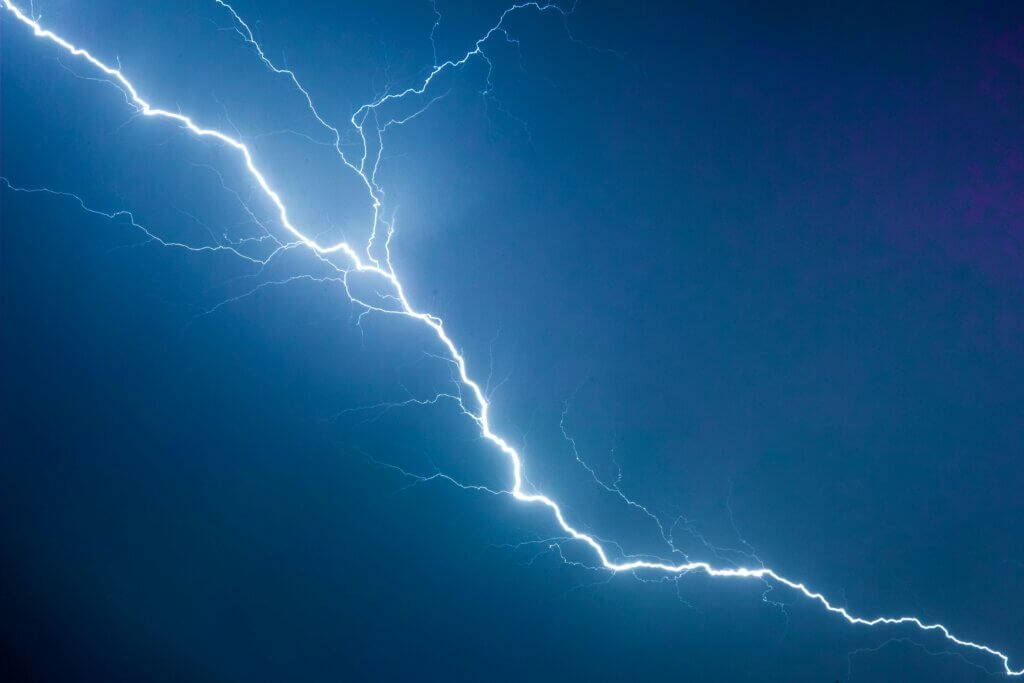
When a sudden thunderstorm rolls in over an outdoor job site or facility, quick decisions matter. A large University in North Carolina stopped their game this past weekend and evacuated the stands due to a thunderstorm. It does matter! Misconceptions about lightning can turn a manageable weather delay into a serious emergency. Understanding how lightning behaves—and how to respond if someone is struck—is essential for every workplace.
Common Myths vs. Scientific Facts
- Myth: Lightning never strikes the same place twice.
- Fact: Lightning frequently hits the same spot repeatedly, especially tall, pointed, and isolated structures like towers or tall buildings.
- Myth: Clear skies overhead mean you are safe.
- Fact: Lightning can strike 10 to 15 miles away from the center of a thunderstorm as a “bolt from the blue”.
- Myth: Touching a lightning victim will shock or electrocute you.
- Fact: The human body does not store an electrical charge. It is 100% safe to touch a victim after you ensure safety to administer CPR or first aid.
- Myth: Rubber tires protect your car by insulating it from the ground.
- Fact: Protection comes from the metal roof and metal sides of an enclosed vehicle, which act as a protective cage (Faraday cage) conducting the current around you into the ground. Rubber tires offer no insulation against lightning.
- Myth: Standing under a tree keeps you safe and dry.
- Fact: Trees are tall and isolated, making them primary targets. Sheltering under a tree is a leading cause of outdoor lightning injuries.
The 30/30 Rule for Safety
Managing outdoor work during storm season requires clear boundaries:
- Count the Seconds (The First 30): When lightning flashes, count the seconds until thunder rolls. If it takes 30 seconds or less, the storm is within 6 miles. Seek safe, fully enclosed shelter immediately.
- Wait It Out (The Second 30): Stay inside your shelter for at least 30 minutes after the last rumble of thunder. Many casualties occur right at the end of a storm when people assume the danger has passed.
Indoor Safety: Knowing What Protects You
Not all shelters offer equal protection. Safe indoor spaces must be substantial, fully enclosed buildings with grounded wiring and plumbing.
- Safe Shells: When lightning hits a building, the current travels safely along the exterior walls, plumbing pipes, electrical wiring, and phone lines into the earth.
- Unsafe Structures: Open structures—such as picnic shelters, carports, tents, tool sheds, and dugouts—lack internal infrastructure to divert current and offer no protection.
- Indoor Conductive Hazards: Avoid running water (baths, showers, washing dishes) because current can travel through metal and plastic pipes. Stay off corded electronics plugged into wall outlets; cell phones and wireless laptops are safe to use.
First Aid: What to Do If Someone Is Struck
- Move to Safety: Check the area. If conditions remain hazardous, move yourself and the victim to an enclosed building or hard-topped vehicle.
- Call 911 Immediately: Notify emergency personnel right away.
- Check Pulse and Breathing: Lightning strikes often trigger cardiac arrest. Confirm if the victim is breathing and has a heartbeat.
- Begin CPR & Use an AED: Start CPR immediately if the victim is unresponsive or lacks a pulse. Attach an Automated External Defibrillator (AED) if available and follow the prompts.
- Treat Secondary Injuries: If responsive, evaluate and treat secondary issues such as severe burns, fractures, heavy bleeding, or shock.
Consider offering first aid topic review sessions for your Medical Response Team as part of your Safety Program. Topics can be customized for your Team but be sure to include,
- Electrical safety,
- Responding to an electrocution victim and victims of a lightning strike, and
- Education on lightening victims for all employees.
Photo by Michał Mancewicz on Unsplash