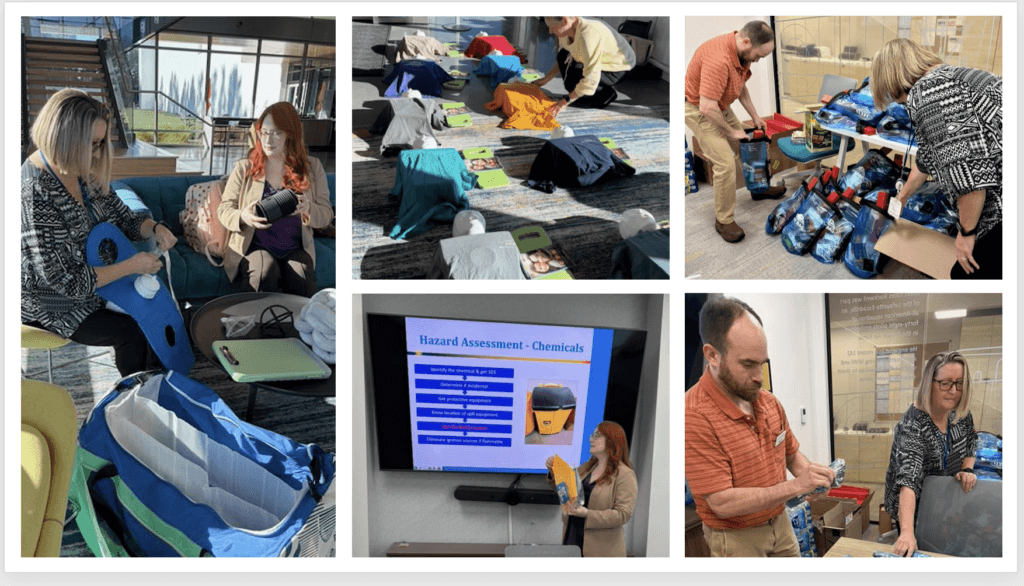
Members of the Dimensions team recently participated in a vibrant Safety Day event for one of our clients. It was an engaging, action-packed day featuring interactive activities—including a custom Escape Room with clues built around Lab Safety and standard operating procedures (SOPs)!
Dimensions was invited to lead several hands-on training sessions:
- AHA Family & Friends CPR: Covering adult, child, and infant response.
- Spill Training & Supply Review: Hands-on practice using spill carts and emergency procedures.
- Emergency Preparedness – Prepared, Not Panicked: Featuring emergency supply recommendations, kit stocking strategies, and interactive “show and tell” demonstrations.
- Creating a Safe Place for Organizational Well-Being: Dedicated leadership sessions for Senior Leadership Teams (SLT) and Mid-Level Managers.
What made this event particularly meaningful was our strategic role in the pre-planning stage. Rather than focusing solely on individual resiliency as initially discussed, we advocated for a systems-level approach that empowers leadership to address root causes of workplace stress and foster holistic organizational well-being.
A truly safe and sound workplace requires leadership at every level to look at organizational factors influencing stress and climate, including:
- Work schedules
- Work organization & job design
- Staffing allocation
- Healthy workplace boundaries
- Culture and overall climate
Crucially, sustainable well-being relies on psychological safety: creating an environment where team members can speak up, respectfully disagree, and challenge ideas without fear. This requires practicing and developing the qualities and skills great leaders possess.
Great leaders aren’t born overnight; they actively cultivate key qualities and skills that become habits through continuous practice, like self-awareness, active listening, vulnerability, and transparent communication.

During our sessions, participants identified several core skills essential for leaders to cultivate:
- Self-Awareness
- People-Centric Focus
- Transparency & Honesty
- Visibility & Accessibility
- Vulnerability & Humility
- Active Listening
- Frequent Communication
- Curiosity & Asking Questions – not just answering!
When physical safety protocols and supportive leadership align with a culture of well-being and safety, workplace cultures truly flourish, and employees thrive!